

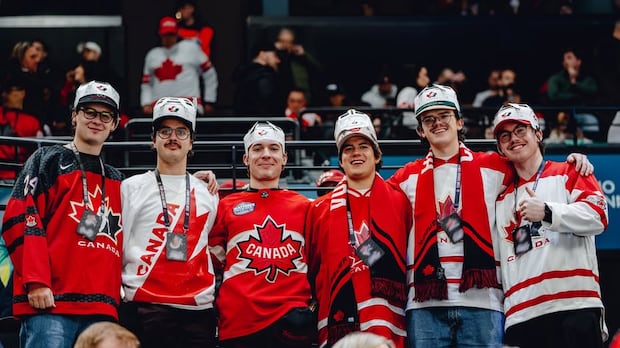
In the high-stakes, "always-on" ecosystem of professional hockey, one of the assets a star athlete can possess may not be a faster, harder slap shot. It may be a group of friends who can handle the digital limelight for them — and a group of ordinary guys from Winnipeg may be the prototype of what's known as influencer by proxy.
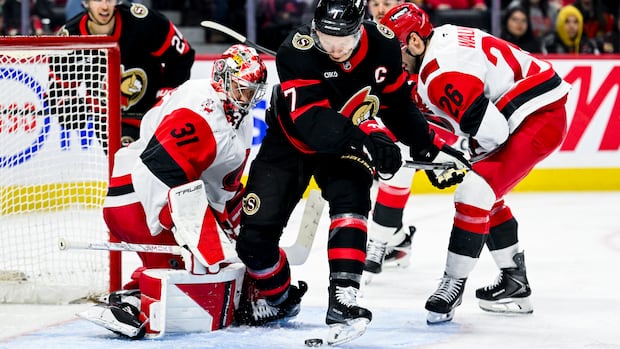
Seth Jarvis is one of the most electric players in the NHL— a puck-possession wizard for the Carolina Hurricanes and a late-addition spark plug for Team Canada’s 2026 Olympic roster.
He's gone viral off the ice, partly because of his blooper reel-worthy interviews, partly because he's truly himself and not afraid to speak his mind – something rare in the NHL.
But while Jarvis was "locked in" during the Milano-Cortina Olympics, his childhood best friends from Winnipeg — Bryan Hanna, Sloan Tremblay, Lucas Humble, Lucas Fry, Matt McLeod and Noah Wagner — may have pioneered a new blueprint for the modern Gen Z superstar.
The strategy allows Jarvis to reap the rewards of an engaging digital footprint without the mental burnout of being a content creator – outsourcing the influencer part of his job to the people he trusts most.
How it startedThe guys from Winnipeg first captured attention on both sides of the border after driving 30 hours to watch Jarvis play in the 4 Nations Face-Off in Boston.
They caught the eye of Dulcedo, a talent management agency which represents Jarvis. Seeing an opportunity, the agency worked with the NHL and Carolina Hurricanes to get them out to a 2025 playoff game.
When Jarvis was chosen at the last minute to attend the 2026 Milano-Cortina Olympics, the guys scrambled to get there too, with help from Dulcedo, Air Canada, Skip the Dishes and other sponsors.
WATCH | #TheMoment Seth Jarvis's buds got tickets to see Team Canada in Milan:
"When we first started having these conversations, we were talking about, 'okay, if you're going to Milan, how's all this content being shared? Like, what are we talking to brands about?' Because it's hard for a brand, obviously. They want to maximize their visibility in this moment, but at the end of the day, they're working with Seth's friends, they're not working with Seth Jarvis," says Phoebe Balshin, a sports lead for the talent agency Dulcedo.
Balshin suggested they launch Instagram and TikTok accounts, and start posting content as the "Good Ole Canadian Boys."
The early posts are much what you would expect from 20-something guys on a trip to Europe.
 Some of the early posts by the Good Ole Canadian Boys (Jamie Hopkins/CBC News)
But soon, the vibe changed, a deliberate decision, said Balshin.
"Our goal whenever we're working with an athlete or in this case, a talent, a group of talent is how can we showcase your personality while also making you relatable to fans and tapping into some trends?" she explained.
The focus, she said, was not to "tone down" their personalities, but share their journey in Milan and their excitement in supporting their friend, while also tapping into trends and other fans of Jarvis.
"What we really wanted to do was make sure that it wasn't always focused on drinking and stuff like that, because that's not really who they are. These guys, as much as they like to have fun when they're at the game, it's a pretty wholesome group. … So we started working with them on a bit more of a strategy around what they were posting."
"In my role, I try to make things as easy as possible for an athlete so they can focus on hockey," Balshin says.
The result is an inversion of the traditional sports entourage.
A star’s inner circle can often be a distraction. For Jarvis, they are a buffer. While the friends have definitely been living the hockey lover's dream, they are also becoming a strategic asset for Jarvis' career.
In Milan, the proxy worked so well it occasionally eclipsed the principal.
The guys did high-profile interviews and appearances with the Olympics, NHL and podcasts like the PWHL's Jocks and Jills, and the Spittin Chicklets. Their Instagram account went from zero to nearly 50,000 in two weeks.
Balshin said the NHL was happy to see the attention because, although the players were locked in to compete and didn't want to feel pressure into creating content for social media, the league wanted credit for allowing the players to participate for the first time since the 2014 Sochi Winter Games.
"What this allowed was for the Good Ole Canadian Boys to create content and showcase Seth and showcase some of that Canadian pride without taking Seth away from being with the team," she said.
Sweetheart signal: Expansion by associationMeanwhile, a collaboration with charismatic Canadian alpine skier Cassidy Gray set the internet on fire.
Gray, dubbed "Canada’s Sweetheart," didn't need a formal introduction to Jarvis, just a digital handshake with his inner circle.
Gray says she has followed Jarvis's career for years – they're the same age and wear the same jersey number, 24. She also played hockey for years.
"I loved watching him at 4 Nations. I was really rooting for him for the Olympic team too, but then he wasn't originally named," she said.
"Then when he got put on as an injury replacement, we're like, holy hell, he's coming to the Olympics. Good for that guy. ….And then I, yeah, I just made a super dumb little video about it and it really blew up."
Soon after arriving in Milan, the Good Ole Canadian Boys responded, suggesting a meet-up.
This is where the proxy model proves its worth.
While the NHL and Canadian Olympic Committee were focused on the ice and the slopes, ensuring the athletes could concentrate on competition, the boys and Gray (after her races ended) were busy "merging fan bases" through the sheer power of the vibe.
"The boys had some people organizing stuff for them that they had their business brains going a little," Gray says, noting that the viral human pyramids and coordinated voiceovers weren't just happy accidents — they were strategic "trends" suggested by agents and Olympic committees.
The internet exploded, some saying it was the Olympics side plot they'd been waiting for – and they were invested.
"It was so funny because none of us are very good with the planned social media trends. Like for me, how I do my social media is it's just super, like it's one take every time," Gray said, adding it took some warm-ups and several takes to get it right.
"It's gonna be 20 takes, it's gonna take an hour, like somebody is not gonna say the words right … We were all so bad at it."
Gray says the appeal of the Good Ole Canadian Boys is that they're "ordinary" but also represent Canadian values, "like friendship and teamwork."
She believes the content worked because the boys "don’t have a camera personality," allowing the brand to feel accidental even when it was highly engineered.
 Good Ole Canadian Boys and alpine skiier Cassidy Gray make a pyramid (Jamie Hopkins/CBC News)
The result was a demographic goldmine, a bridge between niche Olympic sports and the massive NHL machine.
Suddenly, alpine skiing fans were tracking Carolina Hurricanes scores, and hockey die-hards were learning the nuances of the giant slalom.
"Even if Cassidy Gray has three fans that follow the Good Old Canadian boys," Balshin explains, "those can then be three fans that start to follow the Carolina Hurricanes."
Gray agrees.
"People suddenly started caring about my sport, which I think is obviously cool. I love being able to grow a sport, especially because it's a very Euro-central sport."
Vibe-check authenticityHowever, some experts say all of this only works if it's authentic.
Jarvis and his friends are part of the Gen Z cohort (born 1997-2012). It's recognized as the first truly native digital generation, known for being "always on," socially conscious, and valuing authenticity. They are characterized as pragmatic, entrepreneurial and into the "side hustle," with a focus on diversity, mental health and financial stability.
As Dan Robson of The Athletic points out, the magic of the "Winnipeg Six" was their accidental nature — the "innocence of childhood friendship."
"You see these buddies that, you know, last year travelled to Boston to watch their childhood best friend who they're so proud of, be part of this dream-like moment. You could see their exuberance in that. You can see their genuine joy," says Robson, who met Jarvis's friends at the 4 Nations Face-Off tournament last year.
Monica Alvarez-Mitchell, CEO of Pulse Creative in New York, and a Forbes Councils Member, says it's important to maintain "Vibe-Check" authenticity because Gen Z audiences have a cringe radar for over-produced content.
"As quirky as they are, and as young and as imperfect and as silly, they're just a bunch of guys hanging out with buddies and friends and that's what people want to see," she says.
"They don't want [you] to be perfect, they don't wanna just see your highlights. They want to get to know you."
 Monica Alvarez-Mitchell is the founder and CEO of Pulse Creative, an award-winning global creative and strategy agency. She says it's important for content creators to says it's important to maintain 'Vibe-Check' authenticity. (Credit: Pulse Creative)
For example, One blurry, poorly lit photo of the group eating pizza is worth ten high-definition, colour-graded studio shots. The proxy must look like they are having fun, not like they are "at work."
Alvarez-Mitchell says Ducedo has done much to elevate the guy's brand.
She sees a second level of growth – more interaction and community engagement, like the questions they're asking followers.
But, she warns, too much control and curation could detract from what makes the Good Ole Canadian Boys so relatable.
As well, she says they should be transparent about any "side hustle" and don't hide the fact that there are sponsors involved. Make it feel like the brand is fuelling the friendship, not the bank account.
Most importantly, Alvarez-Mitchell says, protect the "innocence" because the moment the Good Ole Canadian Boys feel like a "marketing arm" of a talent agency, the relatability dies.
"Now it becomes about a marketing scheme versus something organic," adds Robson, who recently wrote a feature article about how Gen Z is changing the NHL's culture.
"I think that they should be somewhat careful about that and just continue having fun and continue supporting their guy."
CBC News asked the guys for an interview, but the request was referred to a Dulcedo publicist, who declined.
"At this point, the guys aren’t moving forward with additional interviews on this, so we’ll have to pass for now," Chloe Bonnet wrote in an email."
 The Good Ole Canadian Boys shouted out Lululemon after getting some official Olympics gear (Jamie Hopkins/CBC News)So, what's next?
Since the guys have returned from the Olympics, content creation has been a little harder.
They drove to Calgary to watch Jarvis and the Hurricanes play the Flames. They're planning a trip to Carolina during the team's NHL playoff run.
And, Balshin says, there's more on the horizon, working with brands to attract a valuable demographic – hockey fans.
"If you can tap into the Good Old Canadian Boys who have maybe the same followers as an athlete but are available during the post-season to make content, that's a huge brand opportunity and that's something we'd love to target moving forward," she said.
"It's a big win for brands."